
HEAT TREATMENT & SURFACE ENGINEERING
Heat Treatment & Special Process
Advanced heat treatment and specialized surface processes engineered to maximize component hardness, tensile strength, wear resistance, and operational lifespan.
Engineered Heat Treatment & Surface Solutions
Heat treatment plays a pivotal role in achieving the rigorous mechanical properties, grain structures, and severe-service durability required for mission-critical industrial components.
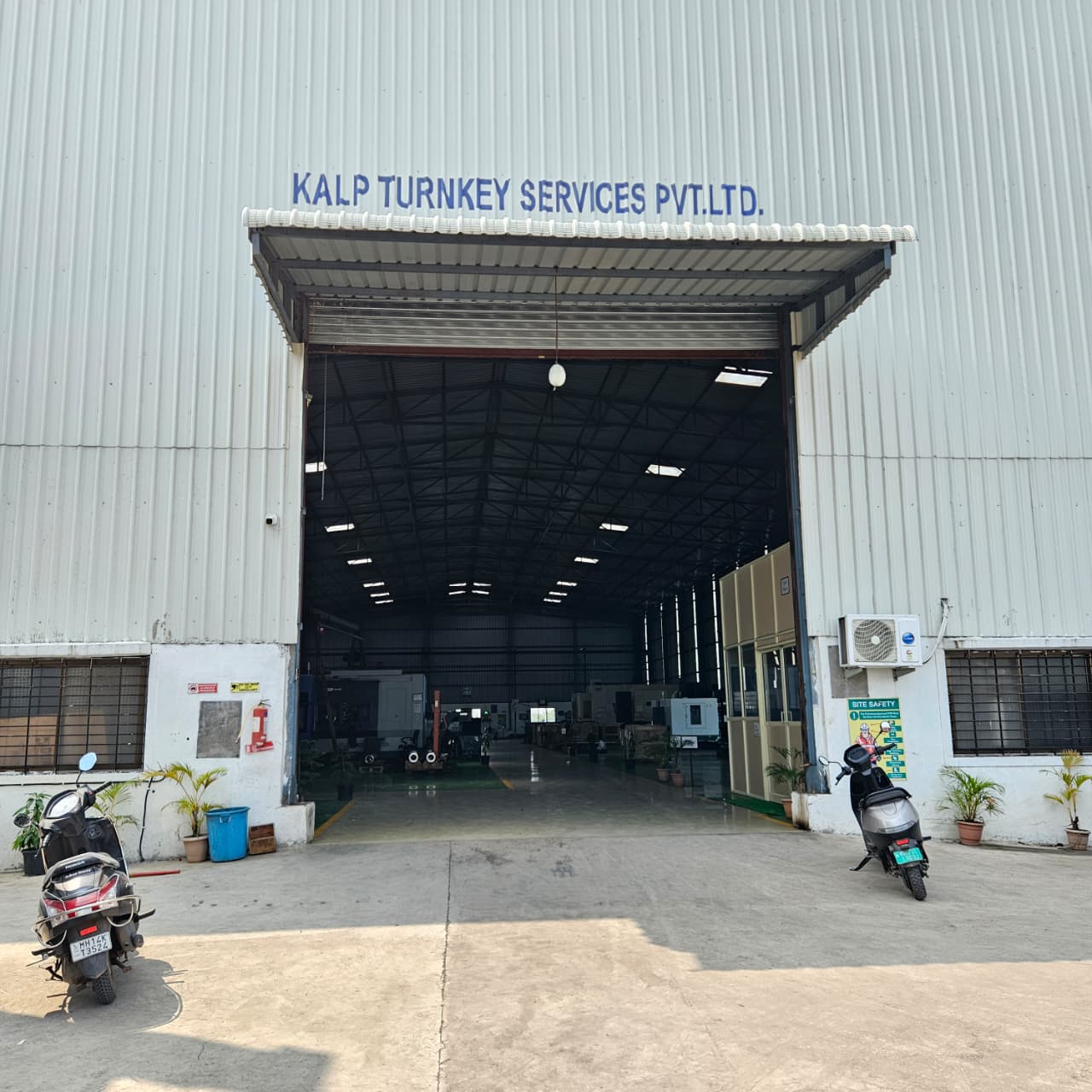
Kalp Turnkey Services operates dedicated in-house heat treatment infrastructure including Quench & Tempering, Gas Carburizing, Normalizing, and Annealing within our 30,000 SQFT facility at MIDC Shrirampur.
Our thermal processing plant features electric-fired pit furnaces (Ø700 × 1200 mm, 700 kg/batch capacity) supported by high-volume 5,000-liter oil and polymer quench tanks with continuous temperature and agitation control.
To complement thermal hardening, we provide in-house specialized surface processes including Zinc Phosphating, Moly Disulfide (MoS2) Coating, Glass Bead Peening, and Al-Oxide Grit Blasting for superior friction reduction and corrosion protection.
We also integrate qualified external specialist processing for Liquid Nitriding (QPQ), Induction Hardening, Vacuum Annealing, and Xylan / Fluoropolymer coatings, ensuring single-source responsibility for complete engineering packages.
Key Features of Our Heat Treatment & Processes
Combining precise metallurgical controls, dual quenching media, and certified laboratory validation for zero-failure performance.
Quench & Tempering
Controlled heating, soaking, and rapid quenching cycles yielding optimum core toughness and tensile yield strength.
Gas Carburizing
Precise case-hardening depth control up to customer specifications, creating wear-resistant outer surfaces.
Normalizing & Annealing
Thermal cycles engineered for grain structure refinement, stress relief, and superior machinability.
Dual Quenching Media
5,000-liter oil and 5,000-liter polymer quench tanks with mechanical circulation to prevent thermal distortion.
Zinc Phosphating
In-house immersion phosphating providing excellent anti-galling properties and corrosion-inhibiting base layers.
Moly Disulfide Coating
Dry film lubricant (MoS2) application reducing friction and wear under extreme contact pressure.
Metallurgical Testing Lab
Micro Vickers and Rockwell hardness testers, sample mounting, and polishing for case-depth verification.
Qualified Special Lines
Seamless integration with audited lines for QPQ Liquid Nitriding, Induction Hardening, and Xylan coatings.
Comprehensive Heat Treatment Capabilities
Our integrated facility handles hardening, softening, surface modification, and protective finishing under strict pyrometric control.
Thermal Heat Treatment
- Quench & Tempering (Q&T)
- Gas Carburizing with controlled case depth
- Sub-critical and Full Annealing
- Isothermal & Air Normalizing
- Thermal Stress Relieving
- Controlled atmosphere electric pit furnaces
- Batch logging with thermocouple monitoring
In-House Special Processes
- Zinc Phosphating (Anti-galling coating)
- Moly Disulfide (MoS2) Dry Film Coating
- Aluminium Oxide Grit Blasting
- Glass Bead Peening for surface finishing
- Spray & Fuse Coating applications
- Chemical degreasing and cleaning lines
- Post-coating protective oiling & sealing
Outsourced & Integrated Lines
- QPQ / Liquid Nitrating (Tenifer)
- Induction Hardening (Selective zones)
- High-Vacuum Annealing
- Xylan / PTFE Fluoropolymer Coating
- Electroless Nickel Plating (ENP)
- Copper Plating for anti-seize threads
- Third-party laboratory NDT verification
Heat Treatment & Metallurgy Equipment
Our shop floor at MIDC Shrirampur is equipped with modern electric pit furnaces, quench tanks, and testing instrumentation.
| Category | Equipment Specifications & Envelopes |
|---|---|
| Gas Carburizing Furnaces | 2 Nos. Pit Type, Ø700 × 1200 mm, 700 kg/batch, Electric Fired |
| Tempering Furnaces | 2 Nos. Pit Type, Ø700 × 1200 mm, 700 kg/batch, Electric Fired |
| Oil Quench System | 5,000 Liters capacity with continuous circulation and heat exchangers |
| Polymer Quench System | 5,000 Liters capacity with automated agitation control |
| Micro Hardness Tester | Micro Vickers Hardness Tester with high-precision optical indentation measurement |
| Macro Hardness Testers | Rockwell Hardness Tester (HRC/HRB) & Brinell Hardness Tester |
| Metallography Equipment | Automatic Specimen Mounting Machine & Dual-Disc Polishing Machine |
| Surface Blasting Systems | Al-Oxide Grit Blasting Booth & Glass Bead Peening Equipment |
| Chemical Coating Tanks | Multi-stage Zinc Phosphating line with chemical titration controls |
Thermal Processing Advantages
Precise Case Depth Control
Automated carbon potential control guarantees repeatable carburized case depth across batches.
Minimal Thermal Distortion
Dual quench options (oil or polymer) permit tailored cooling curves to minimize geometric warping.
Digital Pyrometry Tracking
Multi-zone calibrated thermocouples log every minute of heating, soaking, and cooling.
In-House Microstructure Verification
Cross-sectional specimen cutting, mounting, and micro-hardness profiling verify case hardness gradient.
Corrosion & Wear Resistance
Zinc phosphate and moly coatings provide long-term lubrication and atmospheric rust prevention.
Certified Heat Treatment Reports
Every batch is dispatched with comprehensive furnace charts, hardness logs, and MTC compliance.
Industries We Serve
Delivering certified mechanical components and complex turnkey assemblies for the most challenging operating environments.
Oil & Gas
High-pressure valve seats, downhole completion mandrels, packer bodies, and drive shafts.
Wind Energy
Carburized planetary pins, high-torque turbine pinions, and induction-hardened rotor shafts.
Power Sector
Wear-resistant turbine guide vanes, steam valve spindles, and high-load coupling components.
Heavy Engineering
Heavy-duty transmission gears, splined shafts, drive sprockets, and forged linkages.
Industrial MFG
Case-hardened bushes, wear rings, guide pillars, and severe-friction industrial tooling.
Materials We Work With
Extensive thermal processing expertise across alloy steels, tool steels, and martensitic stainless grades.
Different steel grades require exact austenitizing temperatures, quenching speeds, and tempering holding times. We calibrate cycles for AISI 8620, 4140, 4130, 4330V, EN8, EN9, C45, 13Cr, and 17-4 PH.
All raw material and post-heat treatment properties are certified with Mill Test Certificates (EN 10204 3.1) and physical hardness surveys.
Carbon & Alloy Steels
Stainless & Superalloys
Our Heat Treatment & Coating Process
A strictly controlled 8-step metallurgical sequence ensuring microstructural uniformity and dimensional stability.
Metallurgical Review
Analysis of drawing specs, material grade, core hardness, case depth, and surface treatment requirements.
Degreasing & Pre-Cleaning
Thorough chemical degreasing to remove machining oils, scale, and contaminants prior to furnace charging.
Controlled Furnace Heating
Ramp-up, austenitizing, and carburizing soaking in electric pit furnaces with atmosphere control.
Agitated Quenching
Controlled rapid cooling in dedicated 5,000L oil or polymer quench tanks with automated agitation.
Tempering & Stress Relief
Subsequent tempering cycles to relieve quenching stresses and achieve targeted toughness and HRC hardness.
Surface Blasting & Coating
Al-oxide grit blasting followed by Zinc Phosphating or Molybdenum Disulfide dry lubricant application.
Hardness & Depth Testing
Rockwell C-scale testing and Micro Vickers cross-sectional case depth audits on test coupons.
Certification & Dispatch
Furnace chart logging, inspection sign-off, protective VCI oiling, and dispatch documentation.
Rigorous Heat Treatment Quality Verification
Our in-house metallography and testing laboratory ensures that every batch matches specified mechanical and hardness criteria.
Quality in thermal processing is invisible to the naked eye, which is why our quality protocol relies on precision instrumentation, calibrated pyrometry, and destructive coupon verification.
Test coupons processed alongside production parts are sectioned, mounted in resin, polished, and subjected to Micro Vickers micro-hardness testing to map the exact hardness gradient from case to core.
Our furnaces undergo periodic Temperature Uniformity Surveys (TUS) and System Accuracy Tests (SAT) to ensure compliance with stringent international aerospace and oilfield specifications.
Our Verification Standards:
Why Partner with Kalp Turnkey Services?
Uniting state-of-the-art facilities, engineering expertise, and strict quality to deliver premium B2B contract manufacturing.
ISO 9001:2015 Certified
Quality-focused manufacturing supported by a certified, rigorously audited quality management approach.
Modern 30,000 SQFT Facility
Advanced manufacturing infrastructure located at MIDC Shrirampur with integrated shop-floor operations.
Integrated Manufacturing
Machining, heat treatment, special processes, and quality inspection brought together under single technical ownership.
Advanced CNC Machining
CNC Turning, HMC, VMC, Turn-Mill, Mill-Turn, EDM, Wirecut, and precision Thread Rolling capabilities.
Engineering Support
Mastercam 2022 and AutoCAD 2021 support manufacturing engineering, multi-axis programming, and simulation.
Strong Quality Infrastructure
CMM (800×1500×600mm), VMM, hardness testers, Mitutoyo surface roughness, and precision calibrated gauges.
Industry Expertise
Strong manufacturing track record in Oil & Gas completion tools, Wind Energy, and Power Generation sectors.
Domestic & Export Ready
Fully equipped to serve domestic and export markets with ISPM-15 compliant packaging and customs documentation.
Certified Manufacturing Standards
We adhere strictly to international codes, engineering norms, and quality control systems to support prestigious global clients.
ISO 9001:2015 Certified
Validating our plant operations, quality checks, continuous improvement, and leadership alignment.
100% Traceability
Complete documentation from direct certified metal mills to finished shipping crates (EN 10204 3.1 MTC).
Process Compliance
Controlled operations matching ASTM, ASME, API, DIN, and EN manufacturing specifications.
Frequently Asked Questions
Get expert insights on our capabilities, quality systems, raw material options, and service lead times.
We provide Quench & Tempering, Gas Carburizing, Normalizing, Annealing, and Stress Relieving in-house using electric-fired pit furnaces with Ø700 × 1200 mm capacity and dual 5,000L quench tanks.
Our pit-type gas carburizing and tempering furnaces have an internal retort size of Ø700 mm diameter by 1200 mm depth, accommodating batch loads of up to 700 kg per cycle.
We utilize precise carbon potential control, electric heating, and calibrated temperature soaking times, validated by sectioning and micro-hardness testing on companion test coupons.
Polymer quenching allows adjustable cooling rates intermediate between water and oil, significantly minimizing distortion and cracking risks on complex or variable-thickness components.
Yes. We operate in-house Zinc Phosphating, Moly Disulfide (MoS2) dry lubricant coating, Glass Bead Peening, and Aluminium Oxide Grit Blasting lines.
Yes. We manage fully integrated, qualified external lines for QPQ Liquid Nitriding, Induction Hardening, Vacuum Annealing, Electroless Nickel Plating, Copper Plating, and Xylan coating under our single ISO 9001:2015 quality umbrella.